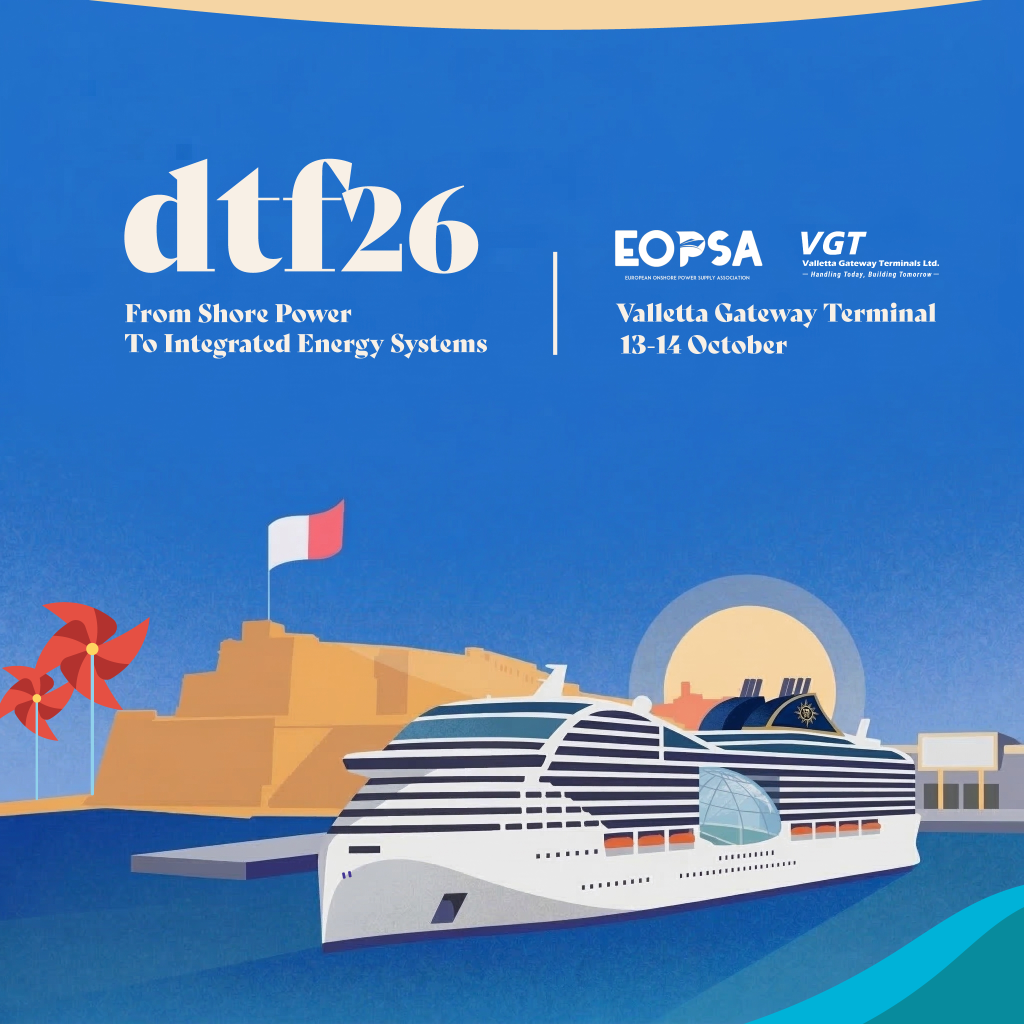
DTF CONFERENCE 2026 · MALTA
13–14 October 2026 · Valletta Gateway Terminal
dtfconference.com
Reality Check
Malta at the Helm: Driving Europe's Next Chapter in Maritime Decarbonisation
The keynote would provide an opportunity to position Malta as a country that has consistently translated European ambition into practical delivery. From pioneering shore power infrastructure in the Mediterranean to continued investment in strategic maritime infrastructure, digital transformation and integrated energy systems, Malta has demonstrated that a small island nation can play a significant role in shaping the future of sustainable maritime transport.
Leonid McKay
Transport Malta
Keynote Speech: European Ports at the Centre of the Energy Transition: Strategy, Sustainability and System Integration
As European ports move beyond isolated decarbonisation projects, the focus is rapidly shifting towards integrated energy and infrastructure strategies capable of supporting long-term operational resilience, competitiveness and climate objectives. This session will examine how ports are evolving from transport gateways into active energy nodes within the wider European energy ecosystem. The discussion will address the strategic challenges surrounding electrification, shore power deployment, grid capacity, renewable integration, infrastructure financing and regulatory alignment, while exploring how European ports can balance sustainability ambitions with operational and commercial realities. The session will also provide insight into the policy direction shaping Europe’s port transition and the role of collaboration between ports, industry and institutions in delivering practical and scalable outcomes.
Keynote Speech: The Energy Port: Building the Infrastructure That Shipping Will Depend On Tomorrow
A strategic look at the investments, partnerships and technologies required to support the next generation of zero-emission shipping.
Keynote Speech from the Host Port

Nicholas Tan
Valletta Gateway Terminal
Ship Readiness vs Port Readiness: Who Is Moving Faster?
The success of shore power depends on alignment between ship retrofitting and port infrastructure readiness, yet progress across both sides of the value chain remains uneven. This session brings together shipowners and port authorities to examine where the gaps lie, highlighting the risks associated with mismatched timelines, underutilised infrastructure, and delayed investments. By addressing both technical readiness and commercial decision-making, the discussion will provide clarity on how stakeholders can better coordinate their strategies to ensure that supply and demand evolve in parallel.

Ivana Melillo
GNV

Jacopo Zanetti
Mareiva
Opening Keynote: From Shore Power to Integrated Energy Systems
Setting the stage for the transition from regulatory compliance to building real energy infrastructure at ports.

Roland Teixeira de Mattos
EOPSA
When Ships Plug In: How National Grids Carry 24/7 Port Electrification?
The rapid expansion of shore power introduces a new and continuous layer of demand on national electricity grids, particularly in ports handling large cruise and container vessels. This session explores how grid operators are preparing to accommodate sustained, high-load demand while maintaining stability, reliability, and compliance with national energy strategies. Through real-world examples and technical insights, the discussion will address grid congestion, infrastructure upgrades, and the coordination required between ports and utilities to ensure uninterrupted power supply in an increasingly electrified maritime environment.

Nilay Nalça
Mod
Derin Law & Consulting

Tania Berry
BMT

Maria Bos
PLUG

Dr. Pauline Seyfert
Adlera Group
Beyond Compliance: Scaling Shore Power Across Multiple Berths
With regulatory frameworks now pushing ports towards mandatory shore power implementation, the challenge has shifted from pilot projects to full-scale deployment across multiple berths. This session examines the operational, financial, and technical complexities of scaling OPS infrastructure, including grid capacity constraints, standardisation challenges, and capital investment requirements. Case studies from leading ports will demonstrate how large-scale rollouts are being executed, providing practical insight into what it takes to move from compliance-driven installations to commercially viable, port-wide electrification.

Ömer Altun
Excelsis Construction

Rune Lyngaas
Fjuel
Levan Chikviladze
Powercon
Shore Power Expansion: Aligning Grid Capacity, Port Demand and Vessel Needs
Shore power is scaling faster than grid readiness. This session examines how ports, utilities, and vessel operators align capacity, demand, and timelines to avoid bottlenecks. It addresses peak load challenges, infrastructure planning, and cost allocation, providing practical insight into coordinating systems for reliable and scalable deployment.

Norbert Grech
Mod
Transport Malta

Christopher Farrugia
Infrastructure Malta

Michele Francioni
MSC
Keynote Speech: Harbour Operations in the Age of Electrification: Managing Safety, Traffic and Energy in a High-Demand Port
OPS Under Load: Proactive Failure Identification and Downtime Reduction Strategies
As OPS systems scale, failure risks shift from isolated faults to system-wide vulnerabilities. This session examines how ports and operators can detect early warning signals, prioritise critical components, and implement redundancy strategies. Focus is placed on minimising downtime through predictive maintenance, system monitoring, and coordinated operational response.

Gabriele Cotella
Nidec

Nikica Mikulandra
KONČAR

Valerie Layan
EOPSA

Dharmendra Umarnani
Schneider Electric
From Fragmentation to Coordinated Electrification: Infrastructure, Grid and Port Alignment in the Mediterranean

David Magro
MALTA FREEPORT CORPORATION/ PRESIDENT OF MEDPORTS ASSOCIATION
Ports as Peak Load Centres: Managing Demand Without Disrupting Cities
As electrification accelerates, ports are emerging as high-intensity load centres, placing pressure on urban grids. This session examines how demand can be managed without impacting city supply, focusing on peak load control, storage integration, smart scheduling, and coordination with utilities to maintain stability while scaling operations.

Maia Pykina
INNIO Jenbacher

Giouli Kommata
Piraeus Port Authority SA
Maritime Decarbonisation as the Foundation of Sustainable Tourism in Europe

Dr. Daniel Attard
European Parliament
Who Pays for Capacity? Cost Allocation for OPS Expansion

Kamran Ul Haq
Lloyd's Register
Policy Deadlines vs Grid Delivery: Closing the Execution Gap
Electrification at Scale: What the System Cannot Ignore Anymore
Platform Security and OPS: Protecting Data as Ports Electrify
As ports expand electrification, booking tools, vendor portals and grid interfaces hold growing volumes of operational data, often on SaaS platforms not built for OPS compliance. This session examines where public exposure diverges from what port authorities and operators expect, and which checks matter before shore power scales. Examples draw on maritime platform reviews through deltaforsch.com.
Systems Response
The Future of Sustainable Cruising: Building the Connections Between Ships, Ports and Power
As the cruise industry accelerates its transition towards lower-emission operations, success increasingly depends on more than the vessel alone. Delivering sustainable cruising requires coordinated investment across ports, energy infrastructure, regulatory frameworks and the wider maritime value chain. This keynote will explore how cruise operators, ports, utilities and policymakers are working together to address the practical challenges of decarbonisation, from shore power deployment and grid capacity to emerging energy solutions and operational readiness. The session will provide insights into the opportunities and barriers facing the sector, highlighting the partnerships and infrastructure needed to support the next generation of sustainable cruise operations while maintaining growth, competitiveness and passenger expectations.
Powering the Maritime Energy Transition: Batteries at the Heart of Integrated Port Energy Systems
As ports evolve into integrated energy hubs, batteries are becoming a critical component in enabling the next generation of maritime infrastructure. Beyond supporting vessel electrification, battery energy storage systems play a central role in balancing grid demand, integrating renewable energy, improving energy resilience and enabling the efficient deployment of shore power and future alternative fuels. This keynote will explore how battery technologies are transforming the way ports generate, store, manage and distribute energy. It will examine the strategic role of energy storage in supporting integrated port energy systems, reducing pressure on electrical grids, increasing operational flexibility and accelerating the transition towards resilient, low-emission maritime operations. Drawing on international experience and the latest industry developments, the session will provide delegates with a forward-looking perspective on how batteries are becoming the cornerstone of sustainable port ecosystems, supporting not only today's electrification projects but also the future integration of hydrogen, smart grids, digital energy management and emerging maritime energy solutions. As the opening keynote of Day 2, this session will establish the strategic context for the discussions that follow, demonstrating why battery technologies are fundamental to building the integrated, resilient and future-ready ports of tomorrow.

Syb ten Cate Hoedemaker
Maritime Battery Forum
Ports as Energy Systems: From Consumption to Active Energy Management
As electrification accelerates, ports are shifting from passive energy consumers to active managers of complex power systems. This session examines how ports can monitor, optimise and coordinate energy flows across shore power, on-site generation, storage and grid connections. It will address load forecasting, demand-side management, digital control systems and real-time optimisation, highlighting how ports can balance operational demand with grid constraints while improving efficiency and resilience. Through practical examples, the discussion will clarify how active energy management is becoming a core capability for ports seeking to scale electrification and meet decarbonisation targets.

Volker Oboda
Mod
Aupuras

Kristian Torvold
Ocean SUN

Juan Esteban Vesga
ABS
Dharmendra Umarnani
Schneider Electric
From Vision to Investment: Unlocking EU Funding for the Infrastructure That Powers Europe's Energy Transition
Europe's energy transition will ultimately be defined not by ambition alone, but by the ability to finance and deliver the infrastructure required to achieve it. While technologies such as shore power, battery energy storage, renewable energy and grid modernisation are rapidly advancing, their successful deployment depends on securing the right investment mechanisms.

Rodrick Zerafa
Servizzi Ewropej f'Malta (SEM)
MegaWatt Shore Power Without Grid Constraints: Alternative Pathways for Port Electrification
As ports accelerate the deployment of shore power, limited grid capacity has become one of the greatest barriers to large-scale electrification. This session explores alternative approaches to delivering megawatt-scale shore power without relying solely on conventional grid reinforcement. Drawing on practical experience and real-world applications, the presentation will examine how decentralised power generation can provide flexible, resilient and scalable energy solutions, enabling ports to accelerate electrification while supporting the transition towards integrated port energy systems.
On-Site Renewable Generation at Ports: Wind, Solar, Capacity and Spatial Constraints
Ports are increasingly exploring on-site renewable energy generation to support electrification and reduce dependence on external power supply. However, the deployment of wind and solar within port environments is constrained by limited space, operational layouts, permitting requirements, and grid connection capacity. This session examines the technical and spatial realities of integrating renewable generation directly within port infrastructure, assessing how much capacity can realistically be installed and how it can be aligned with fluctuating energy demand. Through practical examples and engineering insight, the discussion will evaluate the role of on-site renewables within broader port energy systems and clarify where hybrid approaches, including grid reinforcement and storage, remain essential to achieving reliable and scalable decarbonisation.
From Grid to Vessel: System‑Level Benefits and Technical Considerations of Medium‑Voltage Architectures for Onshore Power Supply
Medium-voltage (MV) architectures are increasingly becoming a critical component in the next generation of high-capacity shore power systems. As ports prepare to accommodate larger vessels and higher energy demand, this session will examine how MV converter configurations can improve power quality, operational reliability, thermal performance and grid-code compliance compared to traditional low-voltage solutions. The discussion will also address system integration challenges, lifecycle efficiency, protection strategies and the role of MV systems in supporting scalable and resilient OPS deployment across cruise, cargo and offshore applications.

Johannes Burkard
Innomotics
Making the Right Electrification Choices: Navigating Investment Decisions in an Era of Integrated Energy Systems
As maritime decarbonisation accelerates, shipowners and operators are under increasing pressure to make investment decisions that remain commercially viable over the long term. However, evolving regulations, geopolitical uncertainty, fluctuating energy markets, rapid advances in battery technologies and the expansion of shore power infrastructure have created an increasingly complex decision-making environment. This keynote explores how organisations can make informed electrification choices by evaluating technologies within the broader context of integrated energy systems. Rather than assessing vessels in isolation, the session demonstrates how fleet electrification must align with port infrastructure, grid capacity, shore power availability, renewable energy integration and future operational requirements. Through practical case studies and scenario-based simulations covering both vessel retrofits and newbuild projects, attendees will gain insight into how digital modelling can compare alternative technology pathways, optimise battery sizing and operational performance, and reduce investment risk under changing market and regulatory conditions. As ports evolve into integrated energy hubs, this session provides a practical framework for making resilient investment decisions that support long-term decarbonisation objectives while balancing operational efficiency, infrastructure readiness and commercial competitiveness.

Teemu Kyläkallio
Rauma Marine Constructions
Beyond Shore Power: Distributed Hydrogen and Flexible Energy Systems for Future Ports
As ports transition from standalone shore power projects to fully integrated energy systems, new approaches are required to balance increasing electricity demand, renewable integration and grid resilience. This session explores how distributed hydrogen generation and methanol reforming can complement electrification strategies by providing flexible, on-demand energy production for ports and industrial environments. Through practical examples, the discussion will examine how hydrogen, local power generation and alternative fuels can contribute to resilient, scalable and future-ready port energy systems.

Adrià Sancho Fibla
e1 Marine
Why Storage Is No Longer Optional for Electrified Ports
As ports scale electrification and expand shore power operations, variability in both energy supply and demand introduces significant operational and grid challenges. This session examines the role of energy storage—particularly battery energy storage systems (BESS)—in stabilising load profiles, managing peak demand, and supporting the integration of intermittent renewable energy. It will address system sizing, response times, grid interaction and operational performance, highlighting how storage underpins reliability in continuous, high-load environments. Through practical examples, the discussion will demonstrate why storage has moved from a supplementary solution to a core infrastructure component for ports aiming to deliver resilient, scalable and cost-effective electrification.
Financing Integrated Energy Systems
PPP models, green bonds, and bankable frameworks for port energy infrastructure.
BESS for Load Levelling and Peak Shaving in Continuous Shore Power Operations
Offshore and Near-Port Wind Integration: Grid Capacity, Stability and System Constraints

Amitava Kumar Ghosh
DNV
Confirmed Speakers
Voices Shaping the Agenda
Levan Chikviladze
Powercon
Roland Teixeira de Mattos
EOPSA
David Magro
MALTA FREEPORT CORPORATION/ PRESIDENT OF MEDPORTS ASSOCIATION
Dr. Pauline Seyfert
Adlera Group
Giouli Kommata
Piraeus Port Authority SA
Johannes Burkard
Innomotics

Luke Jenkinson
ELIRE Maritime
Dr. Daniel Attard
European Parliament

Mykela DeLuca
Micantis
Nilay Nalça
Derin Law & Consulting
Dharmendra Umarnani
Schneider Electric
Teemu Kyläkallio
Rauma Marine Constructions
Leonid McKay
Transport Malta
Syb ten Cate Hoedemaker
Maritime Battery Forum
Adrià Sancho Fibla
e1 Marine
Volker Oboda
Aupuras
Kamran Ul Haq
Lloyd's Register

Ibai Churruca Ormaechea
Ingeteam
Rodrick Zerafa
Servizzi Ewropej f'Malta (SEM)
Maria Bos
PLUG
Nicholas Tan
Valletta Gateway Terminal

Maja Markovcic Kostelac
EMSA
Michele Francioni
MSC
Norbert Grech
Transport Malta
Amitava Kumar Ghosh
DNV
Christopher Farrugia
Infrastructure Malta

Tal Forsher
Alta
Gabriele Cotella
Nidec
Ivana Melillo
GNV
Jacopo Zanetti
Mareiva
Juan Esteban Vesga
ABS
Kristian Torvold
Ocean SUN
Maia Pykina
INNIO Jenbacher
Nikica Mikulandra
KONČAR
Ömer Altun
Excelsis Construction
Rune Lyngaas
Fjuel
Tania Berry
BMT
Valerie Layan
EOPSA
Programme subject to change · dtfconference.com